
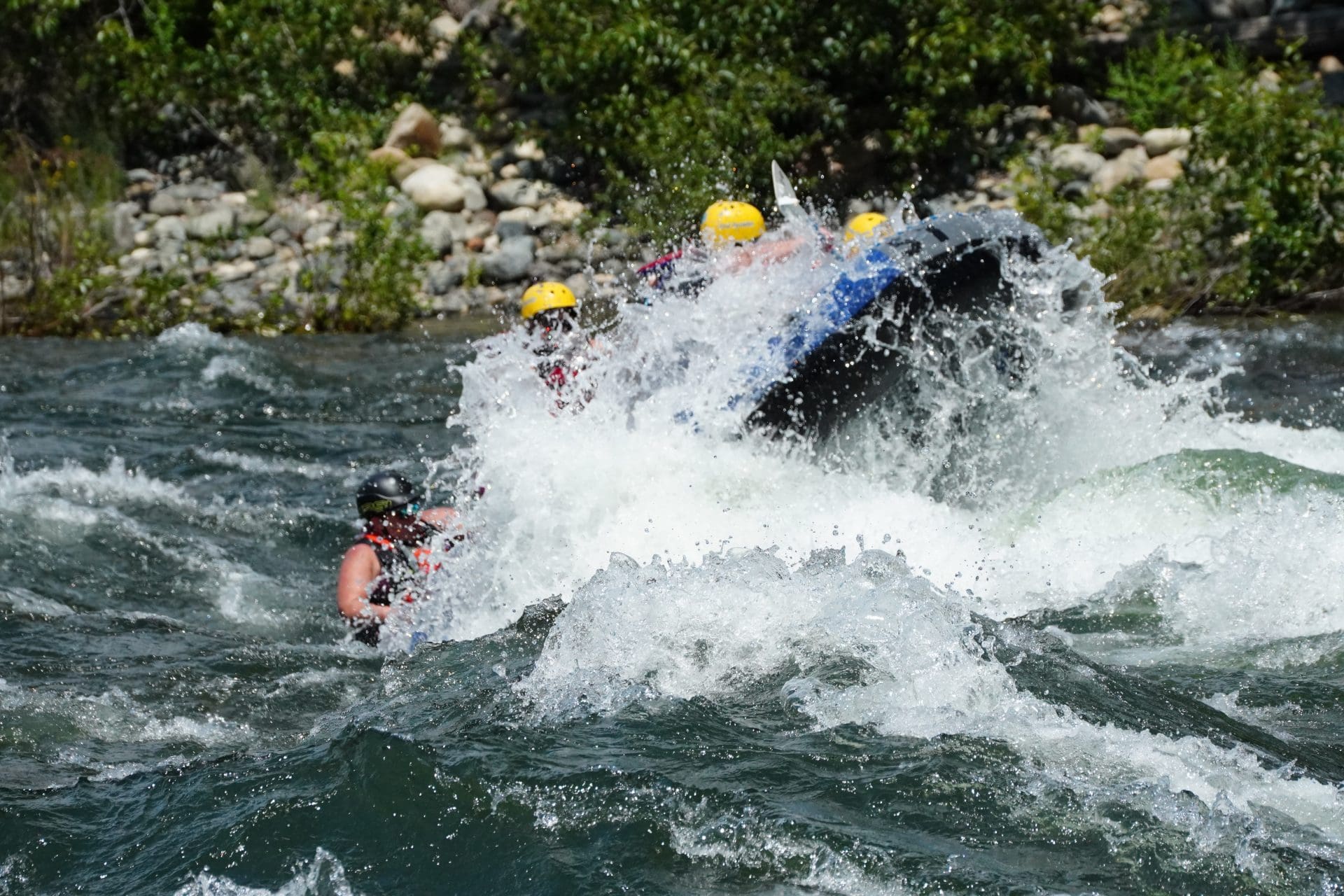
If you’re heading out for whitewater rafting near Leavenworth, the short answer is layers and quick-dry fabric. Skip the cotton, bring a warm top even on a hot day, and wear shoes that strap onto your feet. That covers most of it. The longer answer depends on which month you’re rafting, which trip you booked, and how the Wenatchee River happens to be running that week.
We get some version of this question from almost every guest who books a trip, and it makes sense. Nobody wants to show up in the wrong clothes and spend four hours cold, chafed, or worrying about a flip-flop floating downstream. Below is what we actually tell people at check-in, so that everyone feels prepared for their big adventure.
What River Recreation Provides You
Every trip includes a wetsuit, neoprene booties, a personal flotation device, and a splash top. On some rivers, you’ll also get a helmet. This gear is sized and fitted at check-in, so you’re not guessing whether your own gear will hold up on a Class III rapid.
That’s a meaningful detail, because it means you don’t need to buy specialized river gear before your trip. You’re not shopping for a wetsuit or a drysuit. The only thing you need to think about is what is going to go underneath. Guests booking a Wenatchee River whitewater rafting trip sometimes assume they need their own gear to keep up with more experienced rafters, but you honestly don’t.
If you already own river shoes or a personal wetsuit and want to bring them, that’s fine. Our guides will just take a quick look before you get on the water to make sure it’s suitable for the conditions that day.
What You Need to Bring
The Basics
Pack a swimsuit as your base layer, a bottle of water, sunscreen, a little cash for last-minute needs, and a towel left in your car for after the trip. That last one sounds small, but ask anyone who’s forgotten it. Sitting in a wet swimsuit on a two-hour drive home is not a great way to end an otherwise good day.
The One Thing People Forget
A fleece top or another warm layer. This is the single most common gap in what people pack. Even in July, the Wenatchee runs cold, and wind on the water drops the felt temperature further than most guests expect. If you get cold easily, or if the forecast shows clouds and wind, bring the layer. You can always leave it in the car if you don’t need it.
What Not to Bring
Leave your keys, phone, and anything else you can’t afford to lose in the car. We’ll have a secure spot to hold your keys during the trip, but the river isn’t the place for anything electronic or irreplaceable. If you want photos, our guides typically have a system for that already, so ask before you improvise with your own phone in a dry bag.
How Clothing Needs Change by Season
Spring and Early Summer
From April through June, the Wenatchee is running high on snowmelt, and the water is cold, even when the air temperature climbs into the 80s. The wetsuit we provide does most of the work here, but what you wear underneath matters more than usual. A thin base layer under your swimsuit, plus that fleece top for before and after the trip, makes a difference in how comfortable you are.
Mid to Late Summer
By July and August, river levels drop, and the water warms up. Rapids on the Wenatchee mellow from Class III toward Class II in this stretch, and a lot of guests find they need less layering overall. You’ll still want that fleece for the drive home if you’re wet, but you can generally get away with lighter clothing under the wetsuit.
Late Season Trips
The Tieton River runs on a different schedule entirely. Its rafting window opens in late August and runs into September, tied to a dam release from Rimrock Lake, and the water is often warmer than people expect for that time of year, since it’s been sitting in a reservoir all summer. Guests booking a Tieton River rafting trip in September sometimes overpack for cold weather because they’re thinking about fall in the mountains generally, rather than this specific river’s water source. Bring a layer for the air temperature at the put-in, not for what you assume the water will feel like.
The Misconception: “A Swimsuit Alone Is Enough”
Technically, on a warm August day with mellow water, a swimsuit under your wetsuit is enough. That’s true. But it’s also the exception, not the rule, and it’s the piece of advice that gets repeated online without the context of which month or which river someone is talking about.
Our honest take: we’d rather see a guest show up overdressed with a spare layer in the car than underdressed and cold two hours into a four-hour trip. Being cold on the water isn’t just uncomfortable; it can impact your grip, your reaction time, and how much you actually enjoy the rapids. Guides notice when someone’s shivering, and it changes how much fun that person is having, even if they don’t want to admit it.
Footwear Matters More Than People Think
Booties are provided, but what you wear inside them is worth thinking about. Thin wool or synthetic socks help with warmth and prevent rubbing, especially on longer trips. Avoid regular cotton socks, since they hold water and don’t dry out easily.
If you’re bringing your own river shoes instead of using our booties, closed-toe is non-negotiable. Sandals, flip-flops, and anything without a heel strap will get flagged during gear check. A shoe that comes off in a rapid becomes a hazard, both for you and for anyone downstream.
Small Things That Cause Big Problems
Sunglasses, hats, and jewelry are easy to forget about until they’re gone. If you wear sunglasses, bring a strap or leave them in the car. The same goes for hats. Rings and watches are worth leaving behind entirely, since cold water makes fingers swell or shrink unpredictably, and a ring that fit fine at home can slip off in the water without you noticing.
None of this is unique to River Recreation. The American Canoe Association, which certifies a lot of the swiftwater rescue training our guides go through, covers similar basics in its general paddlesports safety guidance, and the overlap tells you something. These aren’t arbitrary house rules. They’re the same advice paddlers give each other everywhere cold, moving water is involved.
Dressing for Different Trip Types
Family Float Trips
Our Wenatchee River Family Float trip runs gentler water than the standard whitewater trip, so guests can generally dress a bit more casually. Kids especially benefit from a warm layer for the morning, since float trips often start earlier and the sun hasn’t fully warmed the valley yet.
Inflatable Kayaking
If you’re paddling your own inflatable kayak rather than riding in a raft, plan on getting fully wet at some point. It’s part of the experience. Dress like you’re going to swim, because on this trip, there’s a good chance you will.
Overnight Combo Trips
Paddles & Pints and Whitewater & Wine both extend past the river itself into an evening of camping. Pack for both parts of the day separately. Bring your river layers for the rafting portion, then a completely dry set of clothes for dinner and the campsite afterward. Nothing ruins a good evening around a fire like sitting in the same damp clothes you rafted in.
What to Pack for After the Trip
Bring a full change of clothes and leave a towel in your car. You’ll want to get out of your wetsuit and into something dry before the drive home, and having that towel waiting means you’re not doing it in a wet swimsuit sitting on your car seat. Our picnic area has space to change and relax before you head out, so there’s no need to rush.
Cold water immersion and hypothermia risk are real considerations any time you’re on moving water, even on a warm day, which is part of why layering and quick-dry fabric matter more than people assume. The National Weather Service has more detail on how cold water affects the body faster than people expect, even in summer conditions, which is worth a quick read if you’re new to river sports.
Frequently Asked Questions
Do I need to bring my own wetsuit rafting?
No. River Recreation provides a wetsuit, booties, a PFD, and a splash top for every trip. You just need to bring what goes underneath, like a swimsuit and a warm layer.
What shoes are best for whitewater rafting?
Closed-toe shoes with a heel strap work best. We provide neoprene booties, but if you bring your own, avoid sandals or anything that can slip off in the water.
Is it cold rafting on the Wenatchee River?
The water runs cold from snowmelt through early summer, even when the air is warm. By late summer, water levels drop and temperatures rise, so it feels noticeably different depending on the month.
Can I wear jeans or regular clothes rafting?
Not recommended. Cotton holds water and gets heavy and cold once wet. Stick to a swimsuit or quick-dry layers under the wetsuit we provide.
What should I wear rafting in September?
September trips typically mean the Tieton River, where the water is often warmer than the air due to its reservoir source. Dress for the outside temperature at the river, not for what you’d expect from fall weather generally.
Do I need a change of clothes after rafting?
Yes. Bring a full dry outfit and leave a towel in your car. You’ll be wet after the trip, and having dry clothes ready makes the drive home a lot more comfortable.
Final Word
Dressing for whitewater rafting near Leavenworth doesn’t require buying specialized gear. It’s about layering smart, knowing what the river’s doing that particular month, and packing a few things guests consistently forget, like a warm top and a dry change of clothes for after. Get those right, and the only thing left to think about is the rapids ahead.
If you’re ready to plan your trip, browse River Recreation’s current trips and pick the river and season that fits what you’re after. Our team is happy to answer packing questions directly if you’re still not sure what to bring for your specific date.


